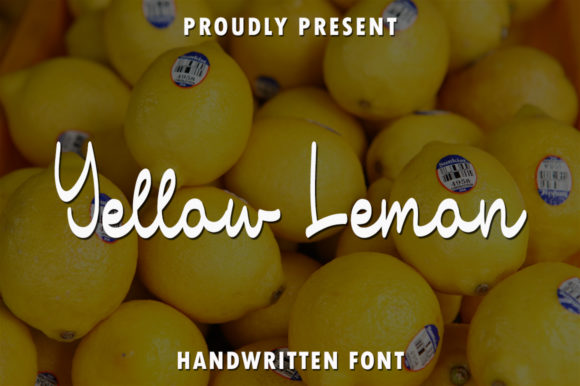
Yellow Lemon Font for Web Design
Yellow Lemon is a Script Handwritten font that brings a sweet and cursive aesthetic to digital design. Its beautifully rounded letters make it ideal for web projects that require a personal touch, from website headers to branded marketing materials. As a Fonts choice, Yellow Lemon offers both visual appeal and functional versatility for designers looking to elevate their online presence.
Yellow Lemon for Creative Portfolio Websites and Brand Identity
Yellow Lemon is an excellent choice for creative portfolio websites where personality and style matter. Using this Script Handwritten font in your site’s header or logo can instantly convey a sense of warmth and approachability. For instance, a designer’s name or brand tagline in Yellow Lemon adds a unique flair that stands out against more traditional typefaces. This font works well when paired with a clean sans serif for body text, ensuring readability while maintaining a cohesive visual hierarchy.
When designing a brand identity, Yellow Lemon helps establish a consistent tone across all digital assets. Whether it's a website, social media graphics, or email templates, the font’s soft curves and elegant strokes reinforce a brand’s character. It’s especially effective for businesses targeting a youthful, artistic, or artisanal audience.
Yellow Lemon for Landing Pages and Conversion-Focused Layouts
For landing pages focused on conversions, Yellow Lemon can be used strategically in headlines, call-to-action buttons, and section titles. Its cursive style adds a human touch that can increase trust and engagement. A headline like “Discover Your Style” in Yellow Lemon feels more inviting than a standard sans serif, making it ideal for fashion, wellness, or lifestyle brands.
However, it’s important to use Yellow Lemon in moderation. Overusing it in large blocks of text can reduce readability, especially on mobile screens. Instead, apply it to short phrases or decorative accents that draw attention without overwhelming the user. Pairing it with a simple, modern font like Open Sans or Lato ensures clarity and balance in the layout.
Yellow Lemon for Online Store Banners and E-Commerce Branding
Online store owners can leverage Yellow Lemon to create eye-catching banners and product titles. Its round, flowing letters add a playful and sophisticated feel that aligns with boutique or artisanal e-commerce brands. For example, a banner reading “Limited Edition” in Yellow Lemon can attract attention and signal exclusivity.
When using this font for e-commerce, consider its performance on different backgrounds. On dark backgrounds, Yellow Lemon maintains good contrast, but on light or image-heavy backgrounds, it may need a subtle shadow or border to remain legible. Always test the font at various sizes to ensure it remains clear on small screens and responsive layouts.
Yellow Lemon for Blog Headers and Content Sections
Blogs and content sites benefit from Yellow Lemon in headers, subheaders, and featured sections. A blog title in this font can set the tone for the entire post, creating a more engaging reading experience. For example, a blog titled “Daily Inspiration” in Yellow Lemon feels more personal and expressive than a standard font.
While it’s suitable for headers, avoid using Yellow Lemon for long paragraphs of body text. The font’s cursive nature makes it less ideal for sustained reading. Instead, use it as a design element to highlight key points, quotes, or section titles. Combining it with a serif or sans serif font ensures the content remains accessible and easy to scan.
Yellow Lemon for Digital Ads and Social Media Graphics
Digital ads and social media graphics often require fonts that command attention quickly. Yellow Lemon’s cursive style is perfect for headlines, captions, and promotional copy that needs to stand out. For example, a Facebook ad promoting a new product could use Yellow Lemon in the headline to create a more authentic, handcrafted feel.
When designing for social media, keep the font size large enough to be readable on smaller screens. Avoid overlaying it on complex images or busy backgrounds, which can make it harder to read. A simple white or black background with a slight drop shadow will enhance visibility without compromising the font’s elegance.
Yellow Lemon for Logo Design and Brand Assets
Logos that incorporate Yellow Lemon can achieve a unique and memorable look. Its round, flowing letters are ideal for brands that want to communicate creativity, warmth, or tradition. A logo using this font might work well for a bakery, a skincare line, or a boutique clothing brand.
When using Yellow Lemon for logos, ensure the font is available in multiple weights or styles if needed. Some fonts offer alternate characters or ligatures that can add variety and refinement. Always check the licensing terms to confirm it’s suitable for commercial use, especially if you’re designing for clients or selling digital products.
Yellow Lemon for Responsive Web Design and Mobile Optimization
Responsive web design requires fonts that scale well across different screen sizes. Yellow Lemon performs well on desktops and tablets, but its readability on mobile devices depends on proper sizing and spacing. Use a minimum font size of 16px for headers and ensure there’s enough line height to prevent crowding.
On mobile screens, avoid using Yellow Lemon for body text or lengthy sections. Instead, reserve it for headlines, buttons, and other interactive elements that benefit from its visual appeal. Testing the font on various devices will help ensure it maintains clarity and impact across all platforms.
Yellow Lemon for Font Pairing and Editorial Design
Font pairing is essential for creating balanced and professional-looking designs. Yellow Lemon pairs well with modern sans serifs like Montserrat or Roboto for body text, allowing the script font to shine in headings and titles. For editorial design, such as magazines or newsletters, it can be used for pull quotes or section titles to add a handwritten charm.
When combining Yellow Lemon with other fonts, maintain a clear visual hierarchy. Use it for display purposes only and avoid mixing it with too many other decorative fonts. A minimalist approach ensures the design remains clean and easy to navigate.
Yellow Lemon for Commercial Font Licensing and Digital Projects
Before using Yellow Lemon in commercial projects, verify the licensing terms to ensure it’s permitted for websites, client work, and online stores. Many premium Fonts include commercial licenses that allow for use in digital products, but it’s always best to double-check the details.
For designers working on multiple projects, having access to different styles and file formats (such as OTF, TTF, or WOFF) is crucial. Ensure the font supports multilingual characters if your audience includes non-English speakers. Proper licensing also protects your work and avoids potential legal issues down the line.